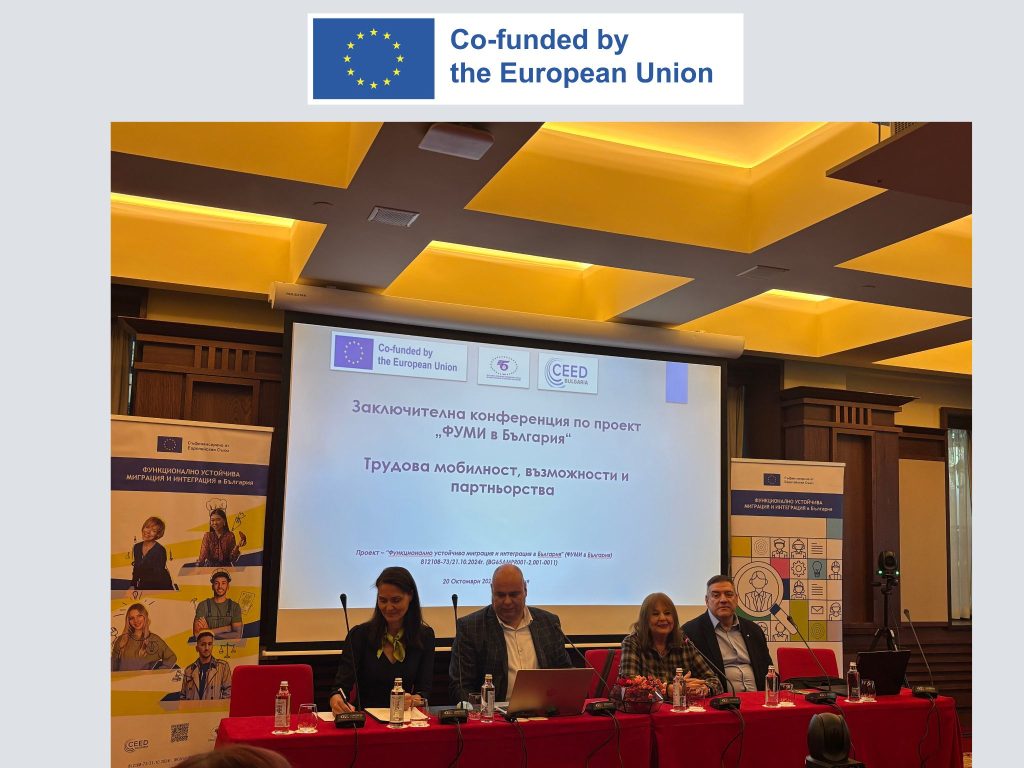
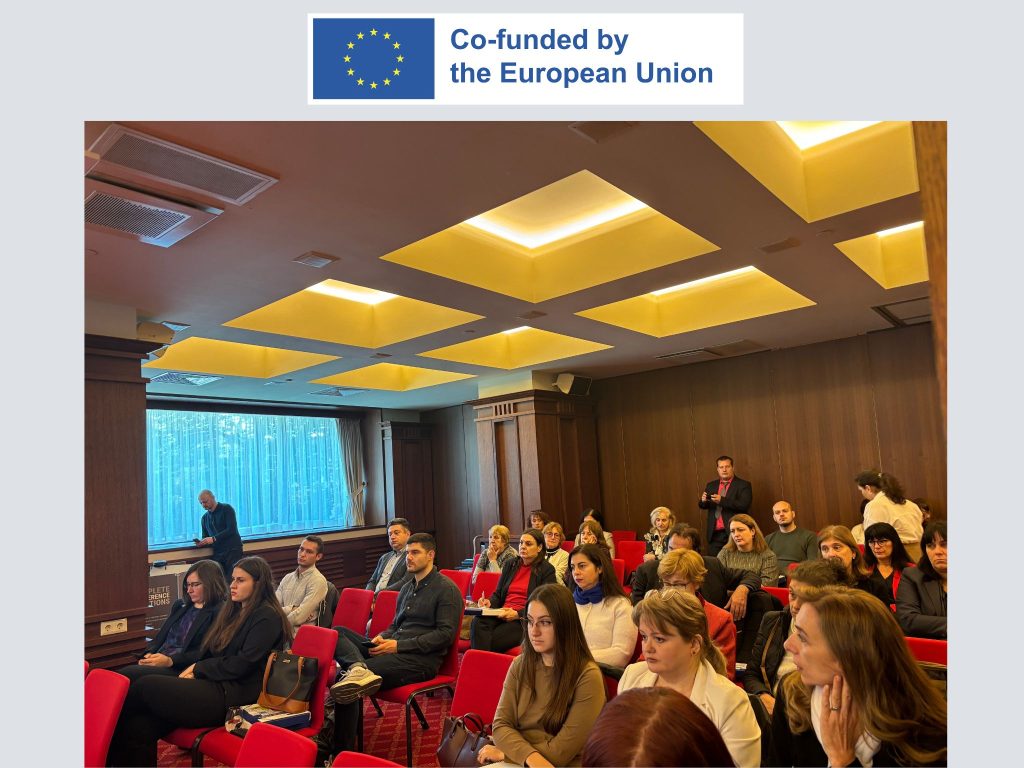
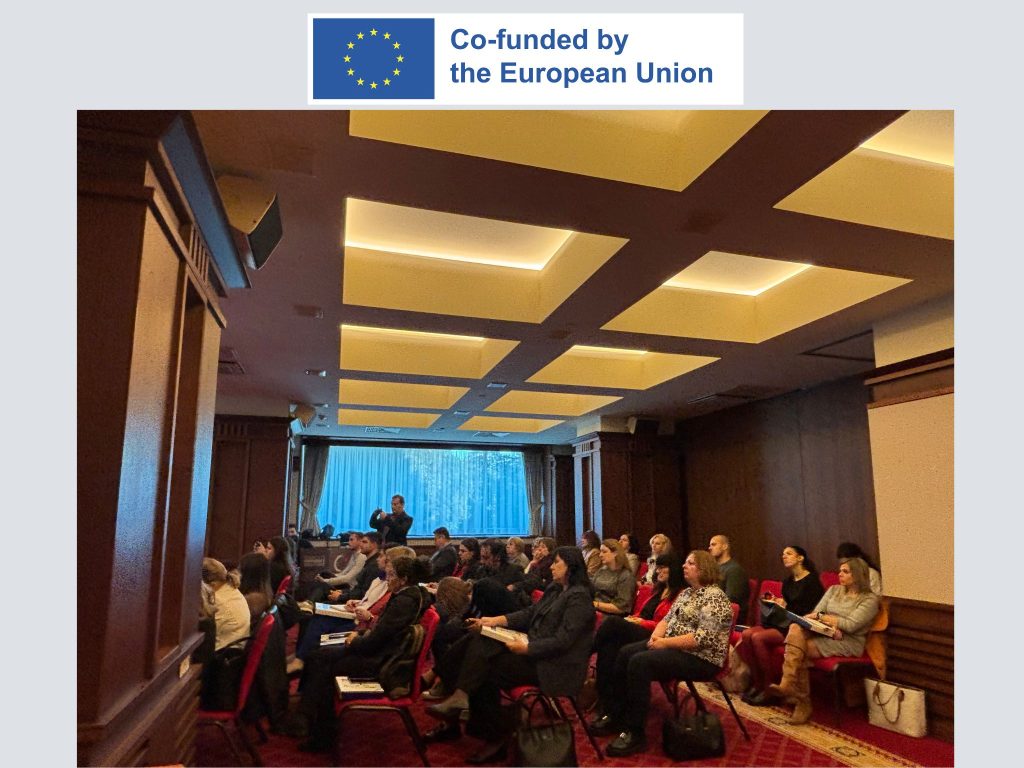
The final conference highlighted the achievements of the project in supporting labour mobility, improving access to information, and facilitating the integration of third-country nationals in Bulgaria.
The project “Functionally Sustainable Migration and Integration in Bulgaria” (FSMI in Bulgaria), implemented in partnership by CEED Bulgaria and the Bulgarian Chamber of Commerce and Industry (BCCI), will conclude at the end of October 2026. During a final conference, the partners presented the project’s key results, practical tools developed, and opportunities to build on the achievements.
The initiative aims to improve the conditions for labour mobility and facilitate access to reliable, practical information on the employment and integration of third-country nationals in Bulgaria. The project supports stronger cooperation among employers, institutions, experts, and international partners in addressing current labour market challenges.
Labour Shortages Create New Challenges for Businesses
During the conference, Beata Papazova, Adviser at BCCI, highlighted the need for Bulgarian businesses to attract workers with the appropriate qualifications and specific skills. According to the data presented, the Bulgarian labour market needs more than 200,000 workers, while technological advancement and rapid changes across various economic sectors are further increasing demand for qualified professionals.
Key challenges include the mismatch between the skills acquired through the education system and employers’ needs, as well as the need for additional training for newly recruited employees. Discussions also addressed the limited ability of the education system to adapt quickly to changing business requirements, the limited willingness of some young people who have graduated abroad to pursue professional opportunities in Bulgaria, and the challenges associated with economic inactivity among young people.
In this context, international labour mobility is emerging as one of the potential tools for addressing workforce shortages. Its effective implementation, however, requires a targeted approach based on the actual needs of businesses, clear procedures, and reliable information for both employers and job seekers.
Practical Solutions for Employers and Job Seekers
The project’s results were presented by Stanislav Chervenkov, Executive Director of CEED Bulgaria, and Gabriela Dimitrova, Director of International Cooperation at BCCI.
As part of the project, research and analyses were conducted to identify the attitudes, needs, and challenges faced by employers and third-country nationals. These findings provided the basis for developing practical solutions to improve access to information and facilitate processes related to labour migration.
The main results include:
- A methodology for reducing the administrative burden associated with employing third-country nationals.
- A practical guide for employers, providing guidance on procedures and requirements for hiring third-country nationals.
- The BGJobsPortal digital platform, designed to improve access to information and employment opportunities.
- Research, analyses, and information materials to support a better understanding of labour mobility and integration challenges.
- An expanded network of contacts and partnerships, creating opportunities for future information exchange and the sharing of good practices.
These tools have the potential to remain useful beyond the project’s completion, supporting informed decision-making and more effective interaction between employers and third-country nationals.
International Cooperation and the Exchange of Good Practices
An important part of the project involved creating opportunities for dialogue and knowledge exchange among stakeholders. National roundtables, regional forums with employers, information sessions, and networking events were organised.
The international dimension of the initiative included working meetings and online information events with participants from Albania, Armenia, Ukraine, Moldova, and Vietnam. These activities contributed to the exchange of experience, the establishment of new contacts, and the expansion of opportunities for future cooperation with organisations from countries outside the European Union.
In parallel, communication and outreach activities were carried out through online media, social networks, advertising campaigns, outdoor advertising, radio, and employment platforms. The aim was to ensure that information on opportunities and procedures related to labour migration reached employers, potential job seekers, and other relevant stakeholders.
Building a Sustainable Foundation for Future Initiatives
The project’s achievements reaffirm the importance of a comprehensive and consistent approach to labour mobility, combining access to reliable information, practical tools, digital solutions, and active cooperation among businesses, institutions, and international partners.
For CEED Bulgaria, participation in the project forms part of its broader efforts to promote better conditions for cooperation between businesses and people seeking professional opportunities. The resources developed, activities delivered, and partnerships established provide a foundation for continued dialogue and future initiatives supporting more effective labour mobility and integration in Bulgaria.
About the Project
The project “Functionally Sustainable Migration and Integration in Bulgaria” (FSMI in Bulgaria) is implemented in partnership by CEED Bulgaria and the Bulgarian Chamber of Commerce and Industry (BCCI) and is funded through the Asylum, Migration and Integration Fund.